
Hi everyone,
Today I will be reviewing Fortune Fragments, a game that was released in June that I only heard about when I got offered a key through a creator platform. And I’m so glad I did, because after completing it, I am thinking this is a game that many of the readers from the blog will want to check out.
Thank you Runoi Games for the review key!
This review is spoiler-free, so feel free to jump in.
Practical information
In Fortune Fragments, you run your own shop as a ‘Foreteller’ and guide your customers’ fates by reading their souls! Sink in the unique blend of Visual Novel roleplaying and hex-tile based rune building set in the bustling modern-fantasy city of Clearcastle.
- Game: Fortune Fragments
- Release date: 24 June, 2026
- Developed and published by: Runoi Games
- Available for: PC and MacOS via Steam
- Price: €15,99 on Steam
- Demo available: Yes
- I played it on my Steam Deck
Welcome to the parlor, how may I help you?
You start the game having just moved to a new city and opening a fortune telling shop. As a foreteller, you don’t take payments from your clients, but from a secret association who you need to report to through letters. It might sound weird to highlight this, but it is something relevant to the story.
Your first reading is offered to the landlady, Agatha, who is a nice old lady (surprisingly I guess). In order to perform a reading, you need to place hexagonal pieces in a grid (called scrying board) making paths with the goal of forming rune shapes. You start placing tiles that form a path from the customer’s soul stone. It can feel a bit confusing, but you should get the hang of it pretty fast.
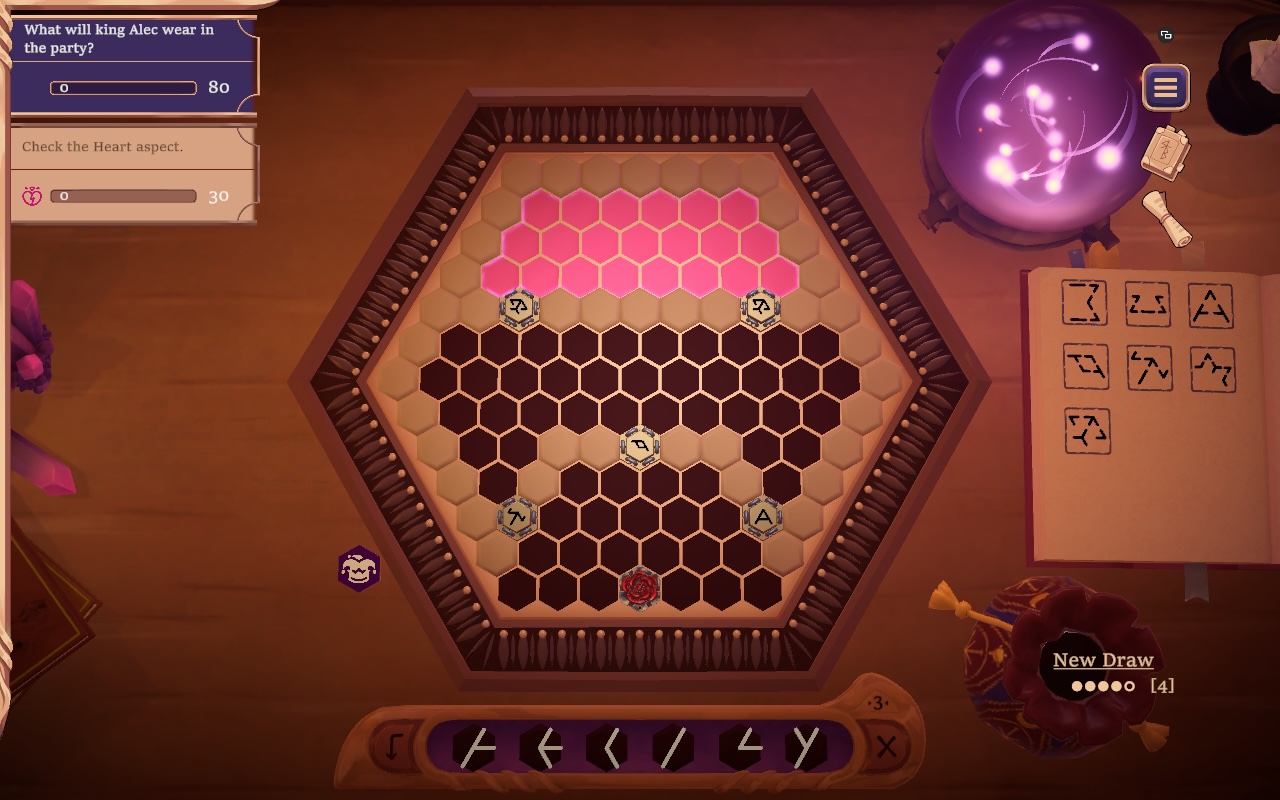
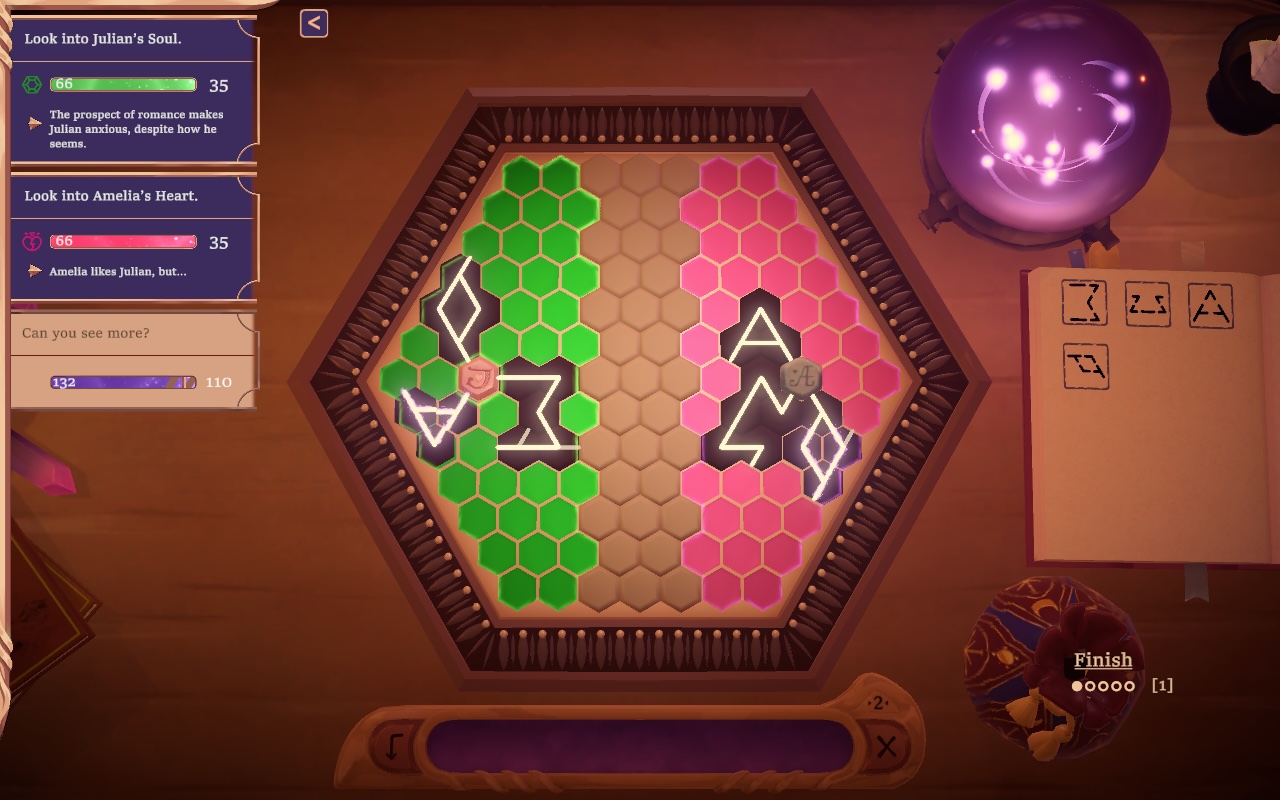
In the beginning, you only have a handful of puzzle piece types and runes you can form. Little by little you unlock more pieces and runes are added to your guide. Plus, something I really liked is that each reading is a bit different. Sometimes you might do a reading for two people at the same time, or you have to deal with specific challenges like having some occupied spots where you can’t place your puzzle pieces.
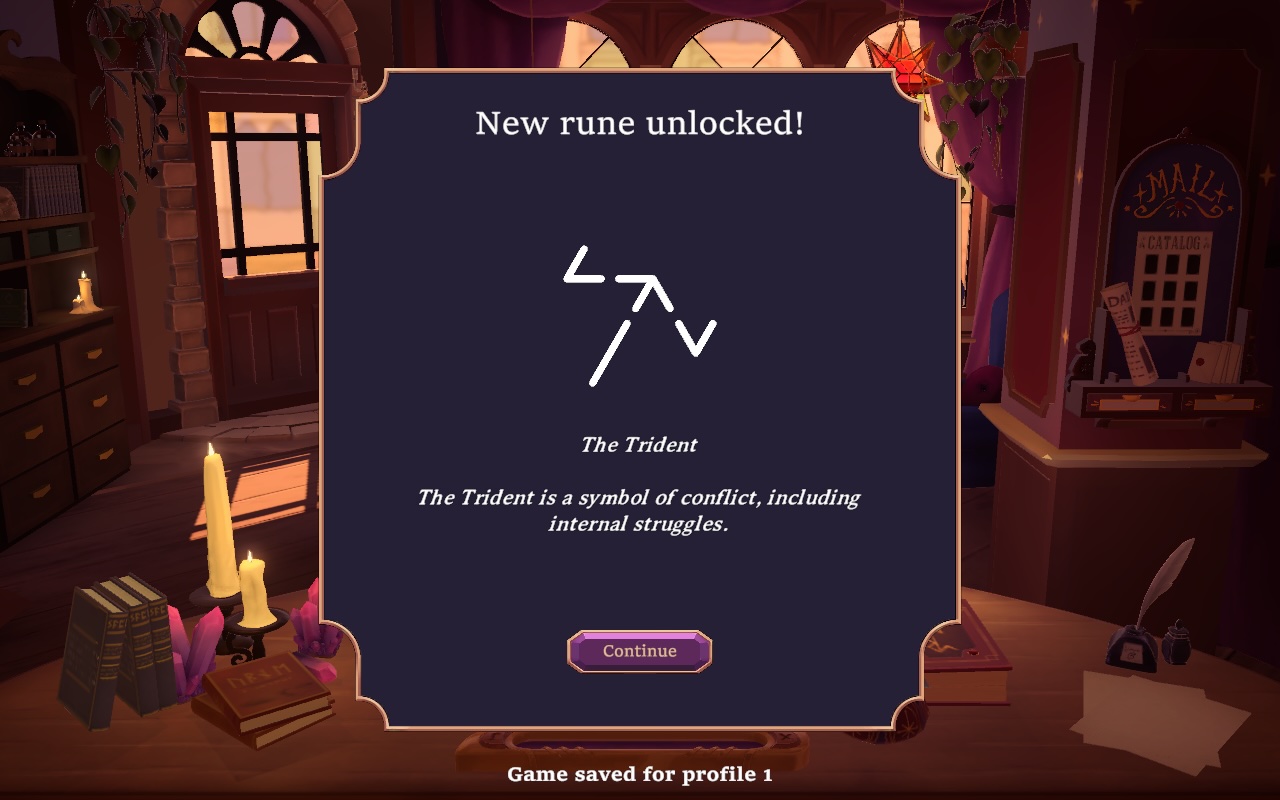
During each session, you need to collect a minimum amount of points so you can unlock different types of advice to give to your customers, and without that minimum, you fail and have to redo the reading. Often there is also an optional goal that unlocks extra insights or advice. I am not a completionist but I felt compelled with every reading to get as many points as possible just so I could get the full picture, meaning very often I would repeat each session two or three times.
There is no punishment for failing the reading (you can try as many times as you like) and no time limit either. The game helps you by allowing you to discard some pieces to get others, unlocking a sort of “joker” tile, having a hint mechanic among other neat details.
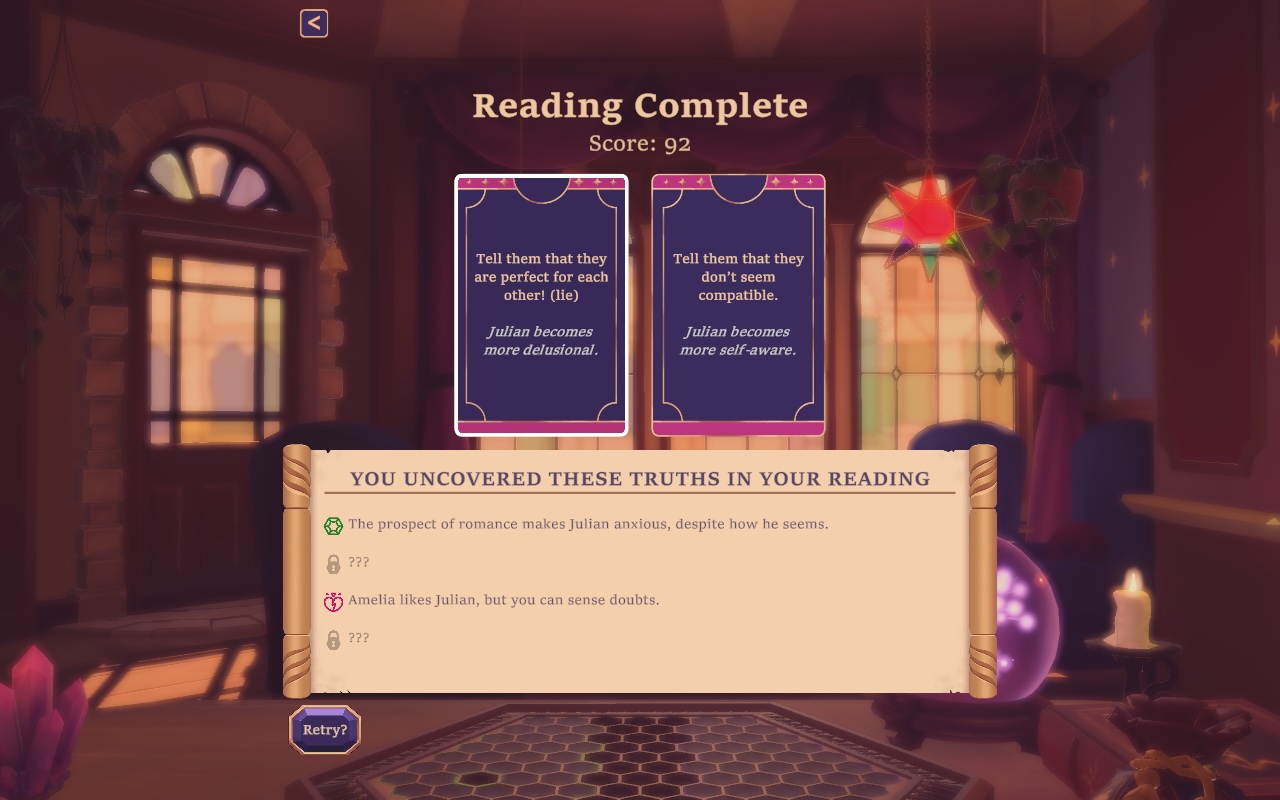
Also interesting to mention that your character is always behind the counter and you never see yourself – thus my comparison with Coffee Talk in this post’s title – though you’re deeply involved with your clients. You have a voice through dialogue options and your decisions matter for the outcome of the game, so at no point did I feel the game was lacking by not having a visual representation of myself, since I felt highly immersed as it was.
Characters and writing
It will be difficult to say a lot without spoiling any plots but I’ll do my best.
I loved the characters from Fortune Fragments, even the ones I didn’t (I’ll explain). I liked most characters, but there was one character in particular I didn’t want to help. However, I appreciated that the game didn’t make everyone universally likeable, as that added a level of depth to my decisions. I don’t need to like everyone, just like in real life (wow, I was not expecting it to get deep).
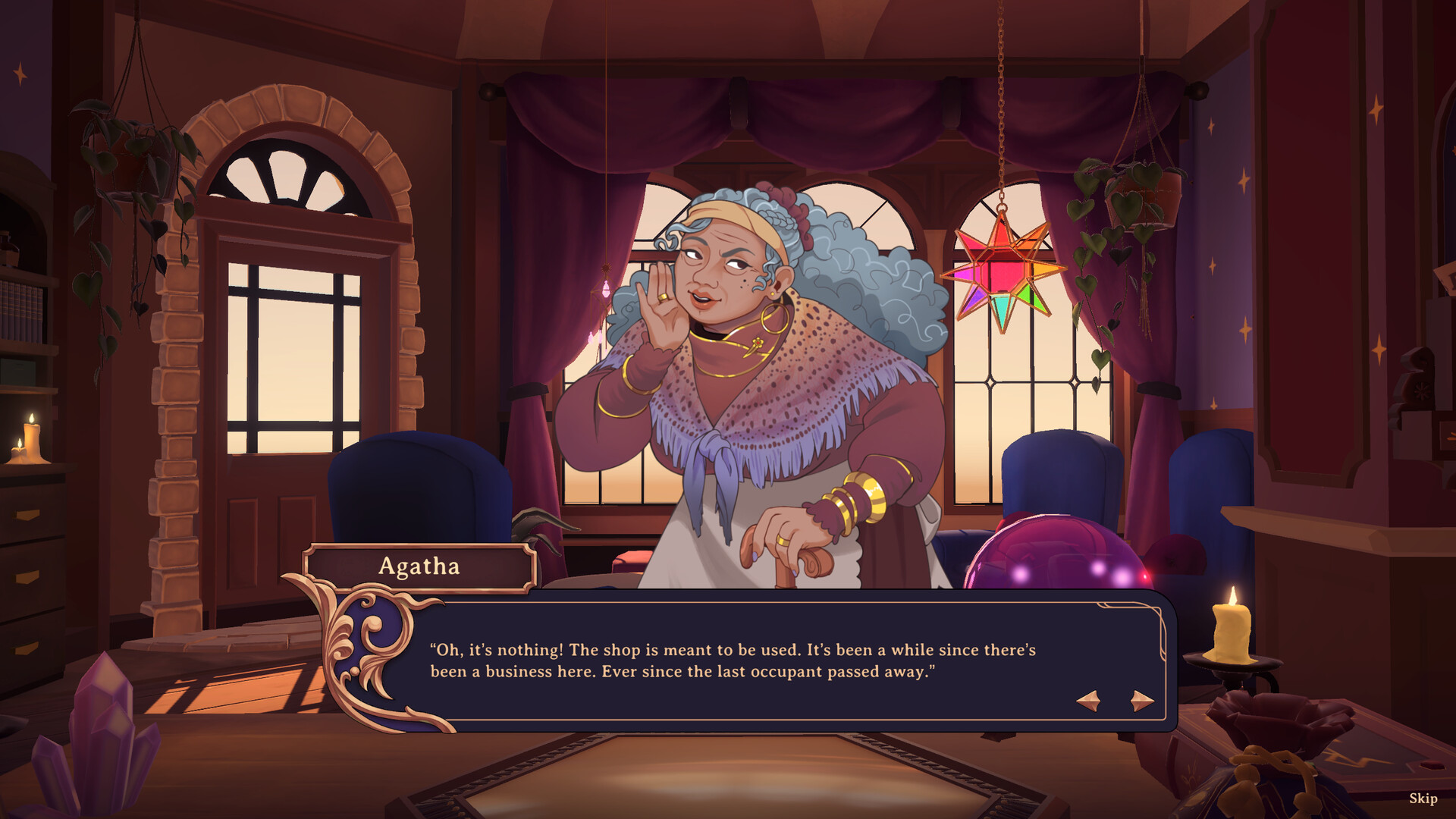
The writing was one of the highlights of the game for me. The scene is set very well and without overexplaining things so you’re transported to Clearcastle. This world is very particular and a bit fantastical, and a big underlying plot point is the tension between different social classes, and between religion and fortune telling.
I was also able to tell that my choices influenced the ending I got, which is a must in a game like this. I finished it feeling satisfied but also surprised with where the plot ended up.
Graphics and music
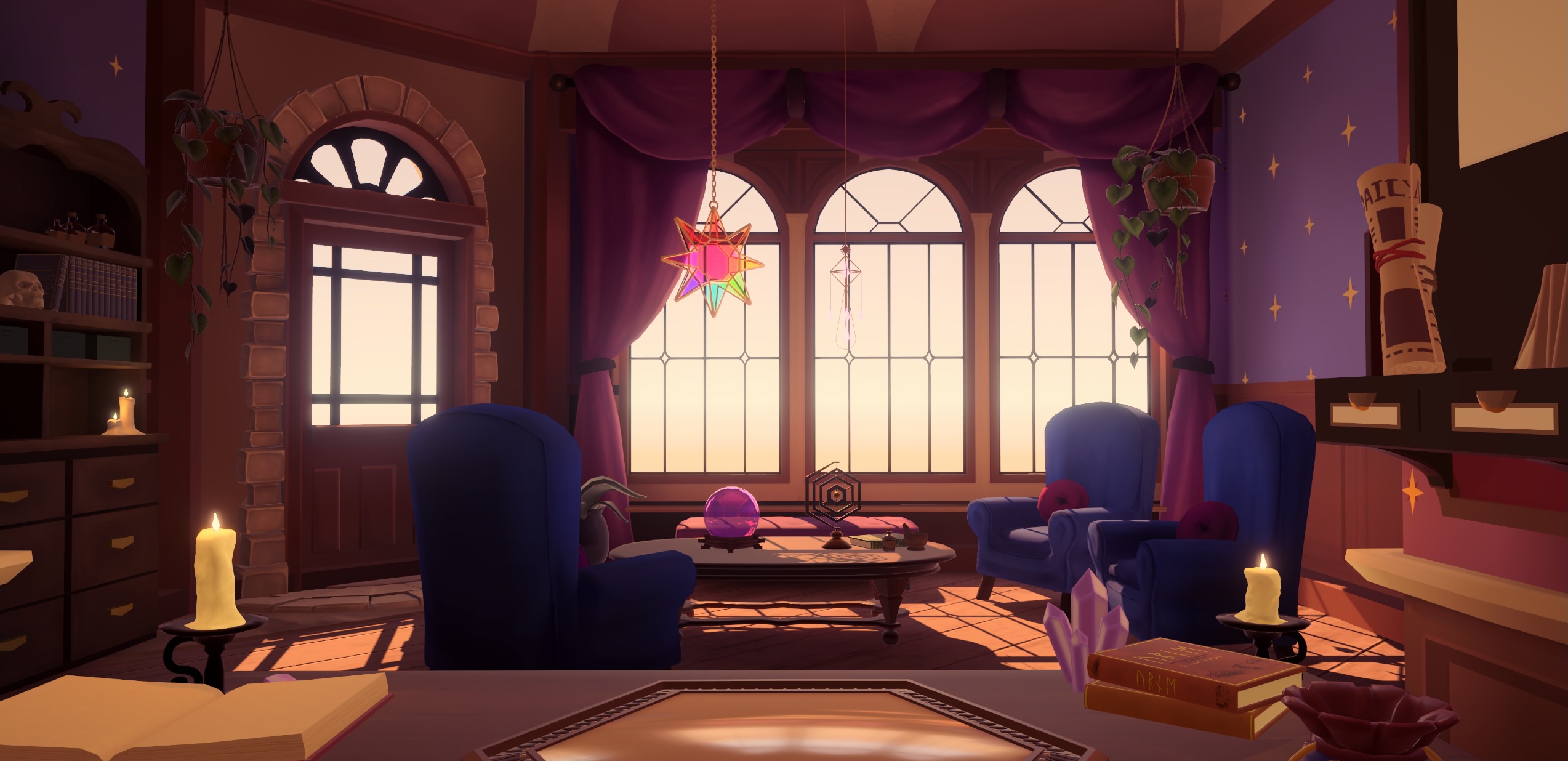
The art of Fortune Fragments is really lovely. The character portraits are charming and expressive. The parlor in the background has a muted palette that helps the characters pop. The camera transition that happens from looking at your client to the scrying board was a neat detail. My main criticism is that I think all characters appear young, for example it took me a moment to realize Agatha was supposed to be elderly, because her skin and hands still look so smooth. It was hard to get a feeling for everyone’s age based on the portraits.
The sound effects are well done: from the sound of the pieces being placed in the board or the little bell when your shop door is open. And the most satisfying of all, when you form a rune correctly. And the music was equally nice, with a variety of tracks depending on whether you’re performing a reading, talking to a client etc. It made the whole experience feel a bit mystical and slightly eerie at times.
My final thoughts and who I think this game is for
Fortune Fragments really surprised me in the best way and I am hoping to help promote the game a little bit with this post as it has only under 30 reviews on Steam as of now! Now this is an underrated indie game.
If you like visual novels with a well-written cast of characters and choices that can affect their paths, while also appreciating more gameplay elements – in this case, the hex puzzles – this might be a game for you.
If the fortune-reading puzzle mechanic didn’t appeal to you or looked too complicated, you might be better with a more ‘traditional’ visual novel. But since there’s a game demo available on Steam right now, you can always try before you buy.
Thank you for reading,
-Luna
Leave a Reply